From Studio to Stadium: Neumann U 67 Microphones on Tour with the Foo Fighters
FOH engineer Antony King brings six Neumann U 67 tube microphones from the studio to the Foo Fighters’ stadium stage.
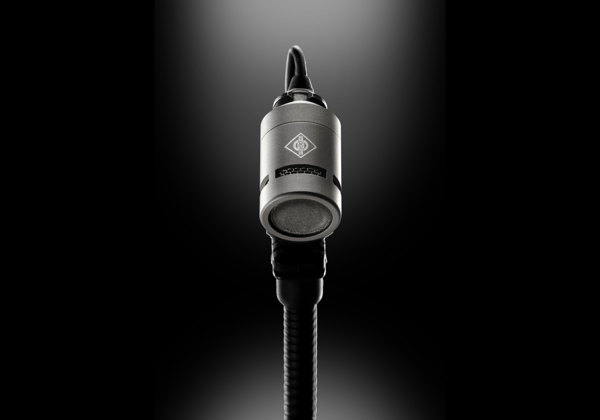
Berlin, November 2026 – a stadium full of fans, three guitarists and a backline built for volume. In front of the Foo Fighters' guitar cabinets sit six microphones you’d normally find in the safety of a studio mic locker: the Neumann U 67 tube microphone. Introduced in 1960 as the successor to the U 47, the U 67 was designed to handle close miking and high sound pressure levels (SPL) with ease thanks to its highly sophisticated tube circuitry. It is the microphone that defined the sound of the 1960s.
The man responsible for such a bold move is Antony King, front-of-house engineer for the Foo Fighters. Antony came up through Britannia Row Productions in London and has mixed Depeche Mode for more than a decade, as well as Nine Inch Nails, The Cure, and Noel Gallagher’s High Flying Birds. He began working with the Foo Fighters on their pandemic-era livestreams and joined full-time after the Taylor Hawkins tribute concerts.
“It had been a dream of mine for a long time,” Antony says. “You’ve got one of the greatest rock bands in the Foo Fighters. Why can’t I use one of the greatest microphones ever made?”
The idea stayed with him for years. “I was thinking it through, and I go, is it possible? Am I crazy? Is it a good idea?” What finally set it in motion was a conversation with the team at Neumann, who had brought him a set of MCM 114 miniature clip microphones to try. “I said, I need Neumann to be on board so we can figure out how to do it together.”
So, what does it take to put a hand-built tube microphone on a stadium stage, night after night, without slowing down the crew?

Every Nuance Counts
Antony first heard what a U 67 could do for the band years ago at Studio 606, the Foo Fighters’ own recording facility and home to the legendary Neve console from Sound City, when an old U 67 went up in front of a guitar cabinet during a session. “Suddenly we’re like, whoa, this is great.”
“They’ve spent ages on their sounds,” he explains. “Chris has a million different pedals, and every song has a cool sound. I wanted to capture that perfectly. I wanted a really clear microphone.”
Just as important is the way the band plays. “Dave will turn his volume button up and down, and sometimes play really quietly,” Antony observes. “So, with the U 67, you could really capture every nuance coming out of his speakers.”
Overhanging stadium roofs are designed to reflect crowd noise back onto the pitch, and clarity fades with every meter. “By the time you get to the back of a stadium, it’s like throwing it down a wind tunnel,” Antony explains. The answer lies at the very beginning of the signal chain: “If you start with a really clear source, by the time you get to the back, it’s still gonna be clear.”

Fast In, Fast Out
Sound was only half the challenge. Every U 67 on a guitar cabinet means a microphone, an elastic suspension, an amp clamp, and a power supply, and packing one away properly takes time and care. “That’s ten minutes at least, and I’ve got six of these,” Antony recalls. “I can’t add an hour to the load-out. I don’t want my crew to sleep an hour less because of my crazy idea.”
His first plan, placing the power supplies at the side of the stage and feeding the mics through a single multicore, didn’t survive the first conversation with the Neumann engineers. The UC 5 cable carries the tube’s supply voltages as well as the audio signal, so its length is part of the design. “You can’t really make it longer.”
Instead, the power supplies moved to center stage. Antony mounted them together in rack sleeves, with mains and cabling terminated inside, and a prewired loom runs to the cabinets at exactly the right lengths. At the end of the night, each U 67 comes off the cabinet in one piece, elastic suspension and all, and goes straight into a Pelican case with foam cutouts for the complete assembly. The only key rule was that the power supplies are always unplugged first, because disconnecting a tube microphone under voltage is bad for the tube. Only then does the stage crew unplug the mics.

No Special Treatment
Antony asked for care, but only up to a point. “I said to the stage guys, ‘Do not drop these. Just be a bit careful.’ But I still wanted them to be treated like all the other microphones on stage. I didn’t want them to be a pet.”
One wild card during the tour was the weather. The stages are roofed, but some rain inevitably blows in on bad weather nights. On Neumann’s recommendation, the team added pop shields as a first line of defense, and dynamic microphones stay rigged alongside as a backup. After eight months of thunderstorms and heat waves, they’re still waiting for a failure. “We haven’t managed to break one in seven, eight months now.”
A microphone that has been set up and taken down in studios every day since 1960 was never as fragile as its reputation suggests, he reasons. “I’m sure some intern in the studio has dropped one and gone, whoops, and put it back in the box, and it’s been fine. So I figured it would survive.” The touring units are current production, handmade in Germany to the original specifications.

The MCM 114 Delivering A Pleasant Surprise
The MCM 114 microphone system arrived with far less anticipation. “I thought, oh, okay, another tom mic. I wasn’t that excited, to be honest,” Antony admits. When Dave Grohl returned to the drum kit for Nirvana’s reunion set at FireAid in January 2025, Antony clipped a set onto the toms during rehearsals and moved on to other things.
The verdict came from someone else. “By the time I got back to the control room, our monitor engineer was like, what is that? What have you changed? I love it.”
Before trusting it on tour, Antony ran a brute force test of his own. “I just got a drumstick and whacked it as hard as I could four or five times. And then we played it again. I guess it passed.” Just as convincing was the MCM system’s bleed rejection: “People forget that it’s a good-sounding tom mic, but if it picks up all the cymbals, then it’s not much use to me.”


The Next Frontier
For Antony, the U 67 microphones are only the beginning. His wish list already includes U 47 mics on overheads, a TLM 102/103 or even an M 147 Tube on snare. “Why not keep trying to make it better? Why not experiment? Some don’t work, some work.”
His advice to fellow engineers is just as direct: “If someone’s thinking about it, do it, because it’s not that big a deal.” Eight months into the tour, the U 67s have become part of the daily routine, with one difference that matters. “They’re just treated like normal mics,” Antony says. “Except they sound great.”
About Neumann
Founded in 1928, Neumann is a global leader in professional audio technology and has been setting the benchmark for reference-quality sound for nearly a century. Renowned for iconic products such as the legendary U 47, M 49, U 67 and U 87 microphones, Neumann combines decades of innovation with German engineering excellence, earning the trust of recording studios, broadcasters, and creators worldwide. Since 1991, Neumann has been part of the Sennheiser Group. Over the years, the company has expanded its portfolio through the addition of Klein + Hummel's renowned studio monitor expertise and the integration of Merging Technologies into Neumann most recently. Today, Neumann offers a complete ecosystem of industry-leading audio solutions spanning microphones, audio interfaces, headphones, studio monitors, immersive audio technologies, and digital audio solutions, covering the entire signal chain from sound capture to reproduction. www.neumann.com
Stay up to date and follow us on: FACEBOOK I INSTAGRAM I YOUTUBE
Neumann Newsroom