Recording POEMS: Viktor Orri Árnason in Conversation
The composer and producer on creating POEMS and recording extraordinary performances with a compact Neumann setup.
Berlin, August 26, 2026 – For POEMS, Viktor Orri Árnason and soprano Álfheiður Erla Guðmundsdóttir brought Icelandic poetry to life across some of the country's most breathtaking locations. In this interview, Viktor Orri Árnason talks about the inspiration behind the project, his recording philosophy, and the role Neumann technology played in bringing the vision to life.
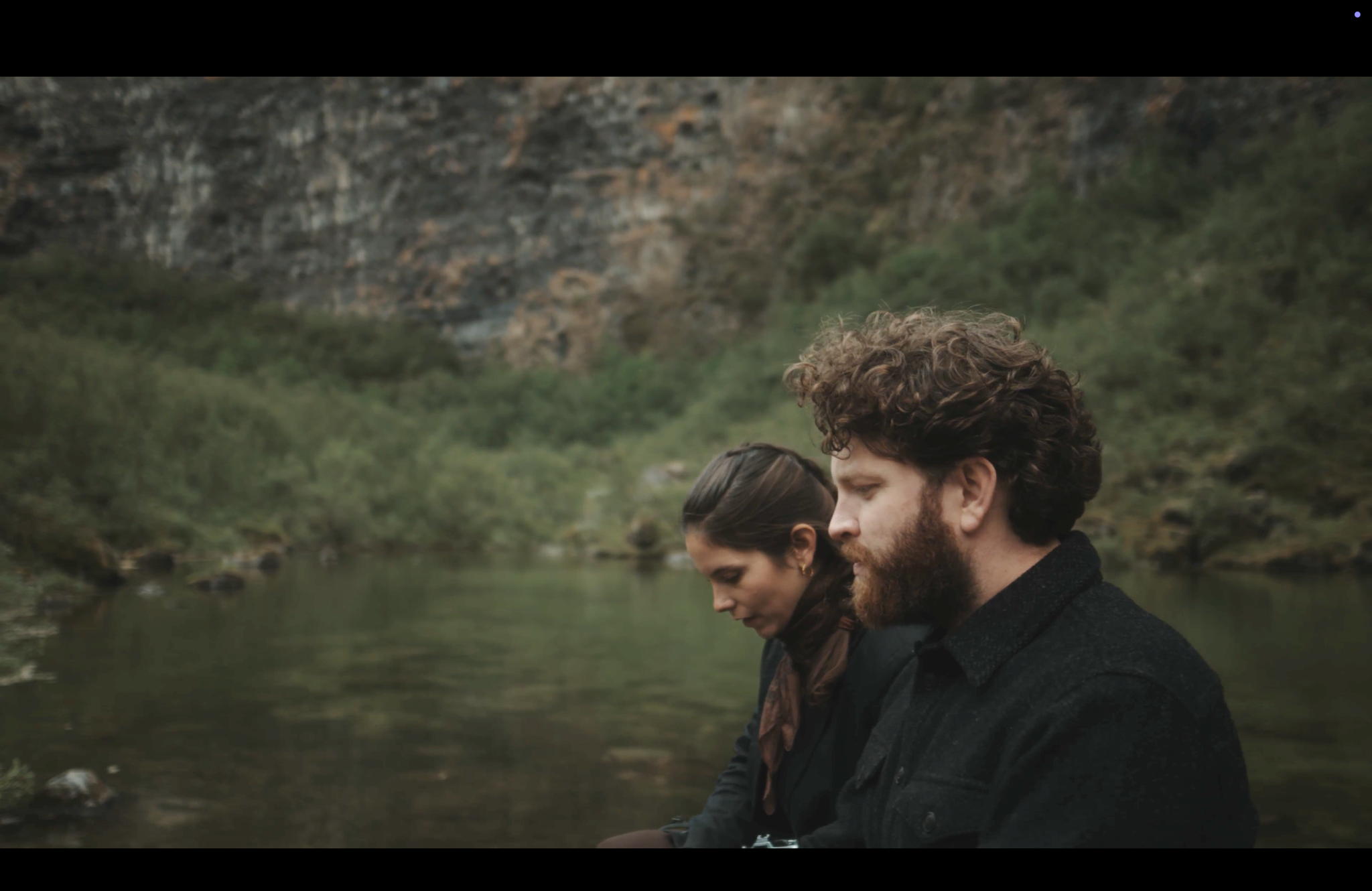
Few modern composers move as fluidly between tradition and innovation as Icelandic composer, violinist, conductor and producer Viktor Orri Árnason. The album POEMS which he co-wrote and performed with award-winning soprano Álfheiður Erla Guðmundsdóttir, captures intimate musical performances across Iceland’s dramatic landscapes.
The accompanying film, POEMS – A Journey Through Icelandic Poetry, follows their journey from historic homes to glaciers, all while preserving uncompromising sonic fidelity. To achieve this, Árnason relied on a minimalist yet uncompromising signal chain centered on Neumann’s MT 48 audio interface, U 67 tube microphone, KM 184 small-diaphragm condenser, MCM miniature clip microphones, and NDH 20 studio headphones.

The result is a project that blurs the boundary between field recording and studio production, combining technical precision with emotional authenticity. In this extended interview, Árnason reflects on his creative evolution, recording philosophy, and the technical decisions that made POEMS an outstanding audio production.
The Moment That Changed Everything
Q: Hi Viktor, let’s start at the beginning. How did you get into music? And do you remember the moment you decided to become a composer?
Viktor Orri Árnason: I began playing violin at the age of five, but my early musical identity was shaped equally by punk and classical music. As a teenager, I also played bass in a punk band and released records before the age of fifteen. Interestingly, my background playing in bands helped tremendously.
It taught me to listen constantly – to react, to shape energy together. Acknowledging the importance of listening became fundamental to how I compose and record today. And yes, I remember the moment I decided to become a composer very clearly. I was seventeen, touring with the Nordic Youth Orchestra, performing Prokofiev’s Romeo and Juliet and Holst’s The Planets. I had practiced my parts obsessively, and during rehearsals I suddenly realized I could look up and listen to the entire orchestra, not just my own voice. I remember having constant goosebumps.
The physical sensation of sound moving through space like that was almost overwhelming. When I came home, I told myself: I don’t want to just play music – I want to create it.


From Improvisation to Film: The Birth of POEMS
Q: How did the project begin?
Viktor: It started during COVID. I invited musicians over to improvise with me, searching for inspiration. When soprano Álfheiður Erla Guðmundsdóttir joined, something immediately clicked. She brought poetry books that meant a lot to her, and we began setting poems to music. Initially, it was just an album which we mainly recorded at my studio when I was living in Berlin. But then we had the idea to perform each piece in a location connected to the poet.
So that became a road trip across Iceland – playing music in the environments where the poets lived, speaking with families, understanding where the work came from… that gave the whole project a deeper emotional layer. It wasn’t just about performing the music anymore, it was about connecting to these stories. It slowly evolved into a full film.
At first, the label wasn’t fully on board with the idea of making a movie. They had only committed to supporting something small – like a live performance video. But we began to see more potential and developed a bigger vision for POEMS, without knowing if the label would really back it in the end. But while we were on the road, and started recording, every evening I would take some time to go through the material, pick the best take, do a very quick mix, and just shape it into something presentable.
At some point, we thought, “Okay… what if we just send this?” So, we exported a rough edit – nothing fancy – and sent it over to ask our label to support this trip. The quality of the recording was so insanely good that the reaction was immediate. As soon as they heard what we were doing, they got it. Suddenly, there was full support for the movie. I think what really made the difference was not explaining the idea but actually letting them hear how it sounded.

A Complete Neumann Signal Chain on the Road
Q: You recorded the entire project yourself. What was your setup?
Viktor: The entire film was recorded using two linked Neumann MT 48 interfaces, giving me four pristine recording channels. That was my entire recording backbone. The MT 48 became the center of the operation. What I loved most was the ability to save snapshots of gain structure and routing. After dialing in the perfect vocal gain on the U 67 or string balance with the KM 184s, I could recall those exact settings instantly at the next location. This was essential because every environment was different – glaciers, wooden houses, open landscapes. The consistency and sonic integrity of the signal chain we used made the entire project possible.
Q: How did you use the Neumann U 67 on the road?
Viktor: The U 67 is probably my favorite microphone of all time. I used it on vocals whenever possible, and it captures something beyond clarity – I’d say it captures emotional depth. Even when placed relatively close, it preserves space and dimensionality. It doesn’t feel clinical. It feels human. That quality was essential for this project because the vocal wasn’t just a musical element – it was the emotional center. The U 67 allowed the voice to sit naturally in the environment, whether indoors or outdoors.


Q: You had very limited channels – how did you capture piano and strings?
Viktor: That was one of the biggest challenges. I used a pair of KM 184 microphones to capture the string quartet. They gave me a cinematic stereo image while preserving incredible detail. The KM 184s are incredibly precise. They capture articulation and space beautifully without exaggeration. For piano and pump organ, I used a combination of KM 184 and MCM miniature microphones. The MCM system was especially useful because it allowed close, stable positioning even in unpredictable environments. The MCM microphones gave me incredible flexibility and isolation without sacrificing natural tone. Despite having only four channels total, this setup allowed me to create a sound that feels expansive and cinematic.
Q: You monitored everything yourself during recording?
Viktor: Yes. The NDH 20 headphones were absolutely critical. When you’re recording in remote environments, headphones become your control room. The NDH 20 allowed me to hear depth, balance, and noise accurately – even in challenging outdoor conditions. I could trust what I was hearing. I would record a take, listen back immediately, and adjust if necessary. That workflow gave me full control over the sonic outcome. Without that level of monitoring accuracy, recording and performing simultaneously would have been impossible.
Recording with the Glacier in the background: A Moment of Pure Alignment
Q: One of the most remarkable scenes is the performance with the glacier in the background.
Viktor: That was magical. This was honestly one of those moments where everything just aligned in a way you don’t expect. We were out there, completely exposed to the elements – no studio, no isolation, nothing controlled. And normally, that’s exactly the kind of situation where you expect problems: wind, noise, temperature, all of that. So, I was already preparing for compromises, especially with the sound. But when we actually started recording, it was almost surreal. There was barely any wind, which is kind of unbelievable for that kind of location. Everything was just… still. And because of that, we were able to record in a way that felt incredibly clean, almost like we were indoors. What really struck me was the contrast – you’re looking at this huge, raw landscape, something that feels very wild and unpredictable, and at the same time you’re capturing something extremely intimate and detailed in the sound. That tension made it very special. And for the singer, it was even more emotional, because that place was connected to her past. So, it wasn’t just visually striking – it had this personal layer as well, which you could feel in the performance.


Q: Are microphones creative instruments for you?
Viktor: Absolutely. Outdoors, for example, you don’t have the possibility to fix things later in a controlled way, so what you choose in that moment really defines the result. And I was surprised how much the microphones already did for you – they gave you color, depth, and a kind of finished feeling without needing to add much afterward. Each microphone wasn’t just capturing the sound; it was shaping it in a very specific way. Like, one mic on the vocal would give this kind of depth and roundness – it almost creates a space around the voice, even if you’re very close to it. And then another mic would feel much more direct, more present, almost like it brings you closer to the source. So instead of thinking “this is the correct mic,” it became more like choosing a character. What do I want this moment to feel like? Do I want it to be intimate, or clear, or wide? And the microphone becomes part of that decision, just like choosing an instrument or an arrangement.
Q: How important was the MT 48 interface?
Viktor: It was essential. The conversion quality is exceptional. It preserved detail, dynamics, and depth. But equally important was the workflow and that you have full control to everything via the touchscreen. Being able to save settings, monitor precisely, and trust the signal path allowed me to focus on music rather than technology. And because we were such a small crew, I was basically doing everything myself – recording, monitoring, making decisions. So having something that reliable and fast made it possible at all. Otherwise, I think we would have needed another person just to handle sound.


Recording as Composition
Q: You’ve evolved into a composer, performer, and engineer. How has recording shaped your artistic identity?
Viktor: Yeah, I think recording really became the connection between everything I do. It started out of necessity – I just wanted to understand why things didn’t sound the way I imagined, especially playing live. That pushed me into learning about sound and recording in the first place. But over time, it changed how I think about music. Recording makes everything more concrete – you immediately hear what works and what doesn’t, and you start making decisions about space, depth, and emotion, not just notes. So now, I don’t really separate those roles anymore. When I compose, I’m already thinking about sound. When I perform, I’m aware of how it translates. And recording kind of ties it all together into one process. And during POEMS, listening to our recordings one evening shaped the next day. Every evening, after filming, I would sit down and go through the recordings, do a quick mix, and play it back for everyone. There was something really powerful about that – hearing immediately what we had captured that day. It made the whole project feel alive and constantly moving forward.
Q: How did the different locations influence the music in the end?
A: A lot, actually. Because every place had its own sound, its own atmosphere. And since we were recording live in those environments, that became part of the music automatically. So, it’s not just the composition you’re hearing – it’s also the space around it. And that gives each piece a very specific identity.


Q: What surprised you most about the way you worked on this project?
A: Probably how little we actually needed. We had a very small setup, just a few channels, a small crew – and still, we were able to capture something that sounds very complete.
That was quite a strong realization. If you make the right decisions early on and have excellent tools at hand, you don’t have to fix things later.
Q: Thank you for the interview and your insights on your workflow, Viktor!
The interview was conducted by Raphael Tschernuth (Content + PR Manager, Neumann)
Dive Into the Music
Watch POEMS - A Journey Through Icelandic Poetry on Stage+
Listen to the album POEMS (Deutsche Grammophon)
Follow Viktor Orri Árnason: Instagram | www.viktorarnason.com
Follow Álfheiður Erla Guðmundsdóttir: Instagram | www.alfheidurerla.com
Stay up to date and follow Neumann on: FACEBOOK | INSTAGRAM | YOUTUBE
About Neumann
Founded in 1928, Neumann is a global leader in professional audio technology and has been setting the benchmark for reference-quality sound for nearly a century. Renowned for iconic products such as the legendary U 47, M 49, U 67 and U 87 microphones, Neumann combines decades of innovation with German engineering excellence, earning the trust of recording studios, broadcasters, and creators worldwide.
Since 1991, Neumann has been part of the Sennheiser Group. Over the years, the company has expanded its portfolio through the addition of Klein + Hummel's renowned studio monitor expertise and the integration of Merging Technologies into Neumann most recently. Today, Neumann offers a complete ecosystem of industry-leading audio solutions spanning microphones, audio interfaces, headphones, studio monitors, immersive audio technologies, and digital audio solutions, covering the entire signal chain from sound capture to reproduction. www.neumann.com


